⏱ The 1-Minute Takeaway
- The Hardware Shift: A leaked glimpse inside Tesla's factory confirms the "Optimus" robot is moving from prototype to mass production. This is the start of "AI Embodiment" - where code gets physical.
- The Software Opportunity: A pre-IPO company dubbed the "ChatGPT of Marketing" (RAD Intel) is disrupting the ad industry. It is currently open to investors at just $0.85/share.
- The Strategy: The smart money is barbelling their bets: buying the giants building the bodies (Tesla) and the startups building the specialized brains (RAD).
The "Quiet Confirmation" of the Robot Age

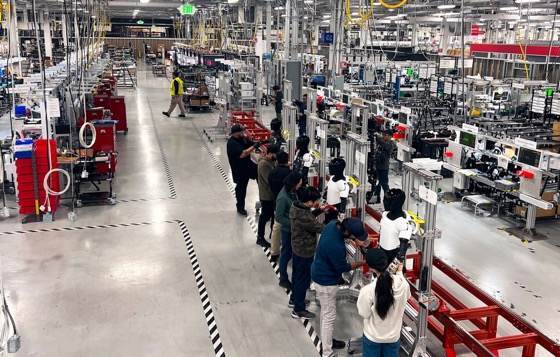
For the last two years, the financial media has treated Tesla’s Optimus robot as a sideshow - a vanity project to keep Elon Musk in the headlines. But a recent photo from inside the factory tells a completely different story, one that seasoned manufacturing experts are taking very seriously.
Inside the facility, rows of Optimus humanoids were spotted mid-assembly. These weren't the shaky, wire-exposed prototypes we saw at AI Day a few years ago. These were polished frames with integrated wiring, production-ready glowing sensors, and standardized chassis. The engineers surrounding them didn't look like mechanics with wrenches; they looked like coders with laptops.
This image is the "quiet confirmation" that the robot revolution has officially graduated from R&D to Manufacturing.
What most investors miss is that this represents a fundamental pivot in the global economy: the shift from Electric Mobility to AI Embodiment. For the last decade, Tesla’s valuation was driven by replacing the gas engine with a battery. The next decade will be driven by replacing human manual labor with general-purpose humanoids.
Think about the scale of this. The global car market is huge, yes. But the global labor market - the cost of moving atoms from point A to point B in factories, warehouses, and homes - is effectively infinite. If Tesla can produce a robot that costs $20,000 but performs $100,000 worth of labor over its life, the economic equation breaks the scales of traditional valuation models.
The "Smart Money" is no longer asking if this will happen. The photo confirms it is happening. They are now asking: Who is powering this? Which suppliers are providing the actuators, the vision sensors, and the training data? Because once this line hits full production volume, the window to invest in the "supply chain of autonomy" will close. We are looking at an industrial shift that could make the transition to smartphones look small by comparison.
The "ChatGPT of Marketing" (And the Pre-IPO Loophole)

While Tesla builds the bodies, another revolution is happening in the digital brain - specifically in how businesses find their customers.
We all know the story of the "Dot Com" boom. If you bought Amazon or Google when they were private, you retired young. But for decades, those deals were locked behind the "Velvet Rope" - accessible only to Silicon Valley insiders and accredited investors with millions in the bank.
That is why RAD Intel is such a fascinating anomaly right now. Often called the "ChatGPT of Marketing," this AI platform is doing for advertising what robots are doing for labor: automating the hard, expensive parts. It helps major brands pinpoint their perfect audience and predict exactly what content will drive sales before they spend a dime on ads.
The proof is in the contracts. This isn't a "concept stock." They already have recurring seven-figure contracts with Fortune 1000 brands across entertainment, healthcare, and gaming. They have backing from insiders at Adobe, Meta, Google, and Amazon. These are people who know exactly what the future of ad-tech looks like, and they are putting their money here.
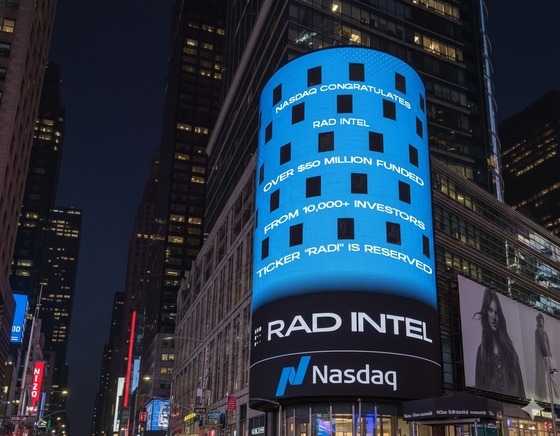
Here is the kicker, and the reason this is crossing our radar today: RAD Intel is still private, but you can invest right now at just $0.85 per share. They have already reserved their Nasdaq ticker symbol ($RADI), and their valuation has soared 4,900% in just 4 years. Usually, by the time a company reserves a ticker and shows this kind of growth, the door is slammed shut for retail investors. But thanks to a Regulation A+ offering, the door is currently cracked open.
This is a rare "second shot" for anyone who missed the early days of Nvidia or Shopify. It’s a chance to own a piece of the AI infrastructure - specifically the "Marketing Brain" - before it potentially hits the public markets and the price is determined by the herd, not the fundamentals.
The "Barbell" Strategy for 2026
The smartest way to play the current market is not to go "all in" on one trend, but to use what professionals call a "Barbell Strategy."
On one end of the barbell, you want the Moonshots: This is the physical world. The Tesla Optimus. The $25 trillion labor market disruption. This is high-risk, high-reward, massive scale infrastructure. You play this by watching the supply chain - the companies making the actuators, the batteries, and the sensors that give these robots life.
On the other end of the barbell, you want the Picks and Shovels: This is the software world. Companies like RAD Intel ($RADI). They aren't trying to build a sci-fi future; they are solving a problem that exists today (inefficient marketing) using the best tech available. These are "Capital Efficient" plays. They generate revenue now, they have clients now, and because they are private (Reg A+), their price isn't whipping around every day based on what the Fed chairman says.
Why this combination works: The robots represent the future of the economy. The marketing AI represents the optimization of the current economy. By holding both - the public giant leading the physical revolution and the private upstart leading the digital one - you are hedging your bets while exposing yourself to the massive upside of the "AI Era."
Don't let the headlines distract you. The real wealth is being built in the factories where robots are born and in the private rounds where the next ad-tech giants are being funded at $0.85 a share.
Bottom Line
Whether it's a humanoid walking off the assembly line or an AI algorithm predicting your next purchase, the world is being automated. You can either watch it happen on the news, or you can position your portfolio to own the machines and the code that are making it happen. The choice is yours.
