Look at this image:

A robotic hand, finished in matte-silver composite, with 22 distinct points of articulation. It isn't holding a steering wheel; it’s sorting a lithium-ion battery cell with the precision of a watchmaker.
While the mainstream media spent the last month laughing at Elon Musk’s "admission" that Optimus isn't yet doing material work, the smart money just watched the Fremont factory floor get gutted. The Model S and Model X - the very cars that built the Tesla empire - are being phased out.
They aren't being retired because of low demand. They are being sacrificed to make room for the Optimus Gen 3 production line.
This is the "Sober Insider" reality: We are witnessing the pivot from a consumer car company to an industrial infrastructure titan. The transition is messy, the R&D is volatile, and the headlines are distracting you from the "Plumbing" of the future.
The R&D Smoke Screen: Why Musk’s "Admission" is a Filter
In late January 2026, Elon Musk admitted that Optimus remains in a heavy R&D phase with "no material factory usage" yet. To the average retail investor, this sounded like a retreat. To the institutional analyst, it was a "Reality Check."
The mainstream narrative thrives on the "Hype vs. Failure" binary. But the data shows a different GTM playbook. While current Gen 2 bots are relegated to basic battery sorting and parts handling at Giga Texas, Tesla is simultaneously preparing for a 1-million-unit annual capacity.
Here is the signal: You don't build capacity for a million units of a "science project." You build it for a standardized industrial asset. Musk’s admission serves as a filter - it shakes out the "weak hands" who expected a humanoid butler by Christmas, while the company retools for the Gen 3 reveal in Q1 2026.
The constraint isn't the vision; it’s the reliability of the physical actuators. The opportunity lies in the transition from "demos" to "human-level proficiency" projected for later this year.
The Great Reallocation: Killing the Golden Geese

The most aggressive move in this shift is the termination of Model S and Model X production at Fremont. These are high-margin, flagship vehicles. Ending their run to prioritize a robot that Musk admits isn't "useful" yet seems like madness - unless you understand the Asymmetric Opportunity.
Tesla is reallocating physical assets and human capital toward Optimus Gen 3 manufacturing. This isn't just a product launch; it’s a total pivot of the company’s physical infrastructure.
The Reality: The "Plumbing" of the future economy isn't a faster sedan. It’s the ability to automate the $42 trillion global labor market. By killing the S and X lines, Tesla is signaling that the "Physical AI" cycle has officially overtaken the EV cycle.
This is what I call the "Constraint-to-Opportunity" loop. The constraint is the finite space at Fremont; the opportunity is becoming the primary supplier of autonomous labor.
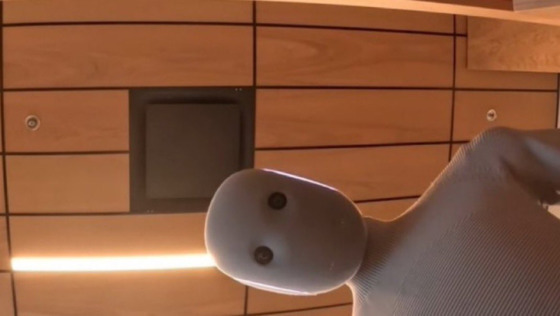
The Anatomy of Enforcement: Gen 3 Dexterity

The "Debt Collector" meme is viral because it taps into a fundamental fear: Systemic Enforcement. But to understand how a robot "enforces" a system, you have to look at the hardware upgrades.
The upcoming Optimus Gen 3 features redesigned hands with 22 degrees of freedom and tendon-driven control. This isn't about "cool tech." It’s about the dexterity required to interact with a world designed for humans - including the "Plumbing" of our daily lives.
The Signal: When you integrate these hands with Grok AI and 1,000 Hz balance adjustments, you move beyond "battery sorting" and into "complex interaction". If a robot can handle a delicate circuit breaker or a credit card terminal, it becomes the physical interface for the digital economy.
The mainstream is watching the "meme." The smart money is watching the fine motor control.
200,000 Virtual Worlds: The "Software" of Labor

How does a robot learn to navigate a factory - or your home - without breaking everything in sight? The answer is Parallel Virtual Environments.
Tesla is currently training Optimus in over 200,000 virtual environments simultaneously. This allows for a compressed evolution that would take decades in the real world. This "Synthetic Training" is the secret sauce behind the Gen 4 upgrades already being teased, which include massive AI breakthroughs for scaling.
The Playbook: While the headlines focus on Musk’s R&D admissions, the "Sober Operator" looks at the training data. Tesla is solving the "edge cases" of physical movement in simulation so that when the 1-million-unit production line goes live, the software is already "veteran" status.

The Silver Connection: The Physical Constraint of AI

This is where we connect the macro dots. You cannot build 1 million Optimus robots per year without an incredible amount of Silver.
Every sensor, every high-speed connector, and every circuit board in a Gen 3 robot requires the highest level of electrical conductivity. As silver trades near $27 an ounce, it is no longer just a "precious metal." It is a strained industrial asset.
The Reality: Trump’s fast-tracking of mining projects isn't a political favor; it’s a strategic necessity for the "Physical AI" era. If the US wants to lead in robotics, it needs the "Plumbing" - the raw silver - to build them.
When you see the Model S and X lines ending to make room for robots, you are seeing the demand for silver shift from "luxury car components" to "autonomous labor components." The demand is accelerating, while the supply remains trapped in the ground.
The Smart Money Radar
We are at an inflection point. The mainstream is distracted by robot memes and Musk’s R&D transparency. The "Smart Money" is positioning for the physical reality of the next five years.
Here is your GTM Playbook for the current market structure:
1. The Defensive Play (The Floor): Silver.
With silver outperforming the S&P and acting as the literal "nervous system" for the robot revolution, wealth protection now requires exposure to industrial-grade precious metals. As mining projects are fast-tracked, the "First Mover" advantage belongs to those who secure their position before the 1-million-unit production lines go fully operational.
2. The Offensive Play (The Ceiling): Physical AI Infrastructure.
Ignore the consumer bots. Look at the companies providing the sensors, actuators, and synthetic training environments (like the 200,000 parallel worlds mentioned). Tesla’s pivot to Gen 3 is the signal that the "Plumbing" of labor is being rewritten.
