This is the front line of the "Asymmetric" war for economic dominance.
While the mainstream media is busy obsessing over which AI chatbot can write a more convincing Hallmark card, the real story - the "plumbing" of the future - is being written in the cleanrooms of Santa Clara and Seoul. We are less than a month away from a pivot point that will define the next decade of capital flows.
On March 16, 2026, Jensen Huang will take the stage at GTC in San Jose. He’s already started the clock, promising a chip that will "surprise the world." But if you’re waiting for the headlines on March 17th to tell you what to do, you’ve already lost. The smart money is already positioning itself behind the "Rubin" architecture.
Here’s the reality: The Blackwell chips that everyone was losing their minds over last year? They’re already the baseline. The Rubin GPU architecture, which Huang confirmed is in full production as of last month, represents a 5x power increase for AI data centers. Think about that. Not a 5% or 50% increase. A 500% leap in compute density.
But here is the "Asymmetric" catch: You can’t run a Rubin GPU on yesterday’s memory. The infrastructure is hitting a wall. The mainstream is watching the GPU; the sober insider is watching the memory bottleneck. That’s where the real "backdoor" opportunities lie.

The biggest lie in tech right now is that AI is a software race. It’s not. It’s a physical infrastructure race. It’s about power, heat, and bandwidth.
Look at the partnership between Nvidia and SK Hynix. Huang recently described the two companies as "one giant team." Why? Because the Rubin architecture is worthless without HBM4 - sixth-generation high-bandwidth memory.
The news intelligence is clear: SK Hynix has managed to double the bandwidth and improve power efficiency by 40%. In a world where AI data centers are threatening to melt the power grid, a 40% efficiency gain is more valuable than the AI itself. This is the "plumbing" I’m always talking about. You don’t bet on the gold miner; you bet on the guy selling the high-pressure water hoses that don’t burst.
While everyone is watching Nvidia's stock price, the real story is the "deep co-design" happening with their power partners. We’re seeing a shift from "customer-supplier" relationships to "integrated ecosystems."
On February 17, Meta and Nvidia announced a multiyear strategic infrastructure partnership. This isn't just Mark Zuckerberg buying more chips. It’s a multigenerational co-design of CPUs, GPUs, and networking. Meta is building the world’s largest AI infrastructure, and they are doing it by fusing their roadmap directly into Nvidia’s hardware. This creates a moat that no startup can cross. If you own the infrastructure, you own the economy that runs on top of it.


If you want to see where the "Smart Money" is actually going, look at the "World Models."
Last month, Jensen Huang and Pascal Daloz, the CEO of Dassault Systèmes, announced a partnership that should have been front-page news. They are building physics-based AI architectures. We’re talking about "Virtual Twins" for entire industries - biology, materials science, and massive-scale manufacturing.
This is the pivot from "Generative AI" (which creates pictures and text) to "Physical AI" (which understands the laws of gravity, friction, and fluid dynamics).
The partnership enables engineers to work at 1,000x greater scale. Imagine designing a new jet engine or a life-saving drug where the AI doesn't just "guess" based on data - it simulates the actual physics of the atoms involved. This is why Nvidia is moving into the Vera CPU space. They aren't just content being the "brain" (GPU); they want to be the "nervous system" (Networking) and the "spine" (CPU) of the industrial world.
This is the "Barbell Strategy" in action for tech. On one side, you have the high-growth potential of these industrial AI partners. On the other, you have the stability of the infrastructure itself.
But don't be an idiot - this kind of massive industrial shift requires a total reset of how we think about value. When you can simulate a decade of R&D in a weekend using a Rubin-powered data center, the traditional metrics for "growth" go out the window. You need to be looking at the "power partners" who are integrated into this BioNeMo and Virtual Twin ecosystem. These are the companies that will be "locked in" for the next 20 years.
Let’s talk about the "Mainstream Distraction."
Right now, the talking heads are debating whether the AI bubble is about to pop. They point to the massive CAPEX spending by companies like Meta and Microsoft. They say it’s unsustainable.
That narrative is complete horseshit.
The reason CAPEX is through the roof is because we are in the middle of a 54-year cycle reset. We are replacing the entire digital plumbing of the world. You don’t build a transcontinental railroad and then stop because the "trains are too expensive." You build the tracks because the person who owns the tracks controls the commerce.
The Smart Money Radar:
Vera CPUs: Nvidia’s move into the CPU market is a direct shot at the heart of the old data center guard.
HBM4 Integration: The partnership with SK Hynix is a "one team" operation. If HBM4 fails, Rubin fails. (Spoiler: It won't).
Industrial Twins: Dassault Systèmes is the backdoor into the "Physical AI" revolution.
The "logic-based" urgency here is simple: By the time the GTC surprise is unveiled on March 16th, the window for asymmetric entry into the secondary suppliers will be closing. The market is efficient, but it’s slow to understand "co-design." It still treats these companies like separate entities. They aren't. They are becoming a single, integrated machine.

If you’re going to play the high-octane, infrastructure-heavy world of Physical AI and Rubin GPUs, you damn well better have a defensive anchor.
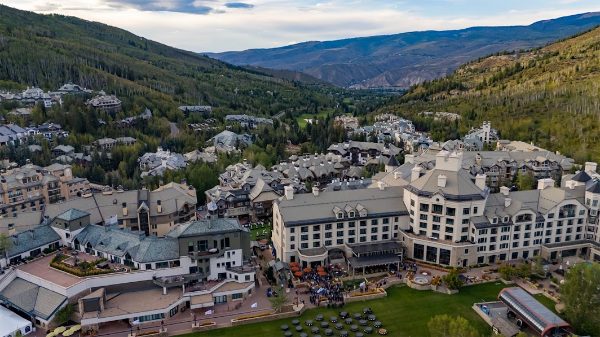
The world is changing. The way we move data is being revolutionized by Nvidia, but the way we move value is being reset by the monetary authorities. While I was tracking the "silicon plumbing" in Silicon Valley, something equally massive was happening in Beaver Creek, Colorado.
We are seeing a convergence. On one hand, you have the most advanced technology in human history (Physical AI). On the other, you have the oldest form of wealth (Gold). Both are reacting to the same thing: The total obsolescence of the old system.
The 54-year cycle I mentioned? That’s the Kondratiev Wave. We are at the end of the "Winter" phase, where the old debt-based systems collapse and the new technological foundations are laid. This is why the world’s largest private gold buyer is taking delivery of two tonnes a week. They aren't "prepping" for a zombie apocalypse; they are front-running a monetary reset that will use digital infrastructure to provide "click-of-a-button" access to physical assets.
Don't be the guy who buys Nvidia at the top because you liked a YouTube video about a robot. Be the investor who understands that Nvidia is the new "General Electric" of the 21st century - a company that provides the fundamental plumbing for everything from Meta’s metaverse to your local hospital’s drug discovery lab.
The "Asymmetric" opportunity isn't in the headlines. It’s in the "Power Partners" who make the Rubin architecture possible. It’s in the companies providing the HBM4 memory, the liquid cooling for 5x power GPUs, and the industrial software for physics-based world models.
